
What Does It Cost to Prepare Rural Land for a New Home in Kansas?
A piece of Kansas acreage can look perfect when you’re standing on it.
Open views. Plenty of room. Privacy. Space for a custom home, barndominium, shop or oversized garage.
But before construction begins, that land has to become a buildable home site.
And that’s where many rural building budgets start to change.
Preparing rural land for a new home can include clearing, grading, excavation, driveway construction, septic installation, a private well or rural water connection, electrical service, drainage work and other improvements that may not be included in the price of the land itself.
So how much should you budget?
There isn’t one number that applies to every Kansas property, but rural site-development costs can easily reach tens of thousands of dollars before the home’s foundation is complete.
The biggest variables are usually the property itself and how far the home will sit from existing roads and utilities.
Here’s what Kansas homeowners should consider before setting a budget for a custom home or barndominium on acreage.
What Is Included in Rural Land Preparation?
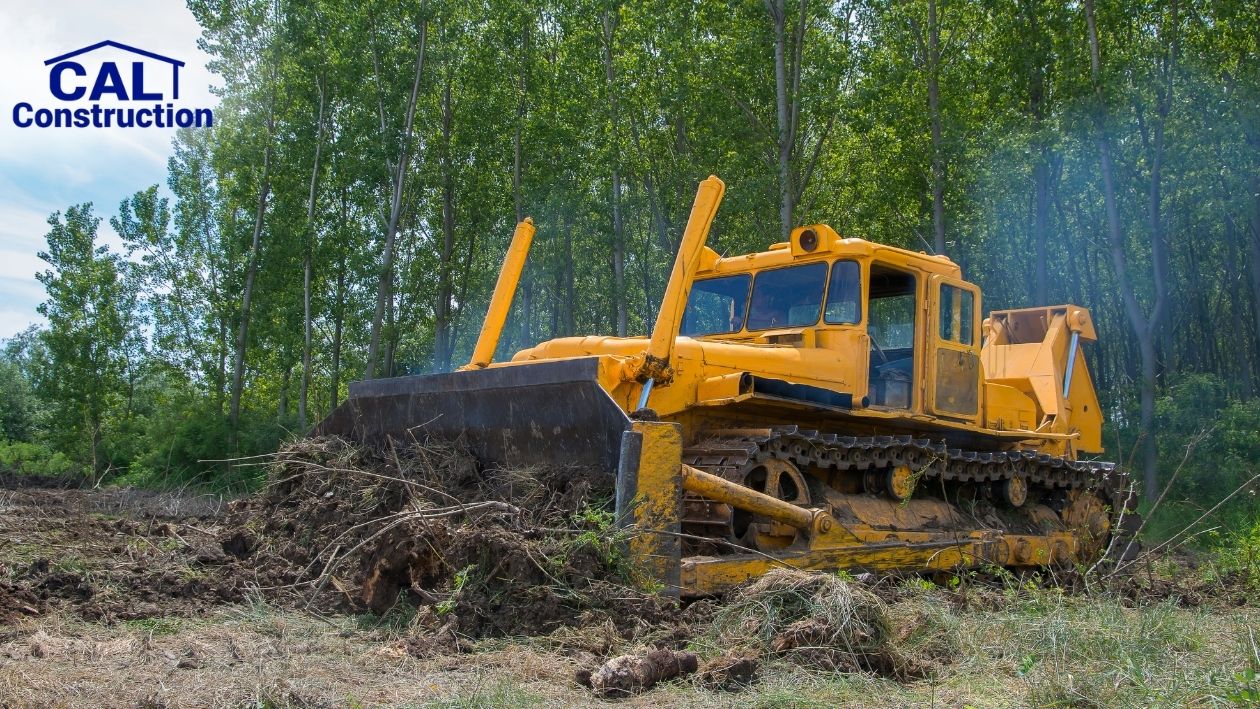
When people hear “site preparation,” they often picture a bulldozer leveling the area where the house will sit.
That’s only part of it.
Preparing acreage for a new home may include:
- Surveying
- Soil evaluation
- Tree and brush clearing
- Demolition of old structures
- Grading
- Excavation
- Drainage improvements
- Construction entrance
- Driveway
- Culvert installation
- Septic system
- Water well or rural water connection
- Electrical service
- Propane or natural-gas preparation
- Utility trenching
- Foundation preparation
Some properties require only a few of these items.
Others require nearly all of them.
That’s why CAL Construction recommends looking at the land, site development and home as one complete project instead of budgeting for the house alone.
If you’re planning a custom home in Kansas, the property can have almost as much influence on your final budget as the floor plan.
How Much Does Basic Site Clearing Cost?
A relatively open Kansas pasture may require very little clearing.
A heavily wooded property can be very different.
Clearing costs are affected by:
- Number and size of trees
- Stump removal
- Brush density
- Terrain
- Accessibility
- Amount of debris to haul away
- Size of the building site
- Driveway clearing
A property with only grass and a few small trees may require minimal preparation.
A wooded five-acre parcel where you want a long private driveway, house, shop and septic area could require substantially more work.
This is one reason two similarly priced parcels can produce completely different construction budgets.
How Much Does Grading Cost Before Building a House?
Grading prepares the land so the house, driveway and drainage systems work properly.
The amount of grading depends heavily on the natural terrain.
A relatively flat site may need only moderate earthwork around the home.
A sloped property might require:
- More excavation
- Fill material
- Retaining solutions
- Additional drainage work
- More complex foundation preparation
And flat land isn’t automatically simple.
A low flat area with poor drainage can create just as many challenges as a hillside.
The important question isn’t:
“Is the land flat?”
It’s:
“How much work does this specific building site require to properly support the home and move water away from it?”
How Much Does a Rural Driveway Cost?
Driveway cost can be one of the most overlooked rural-building expenses.
A house in a subdivision may sit 40 feet from the street.
A house on acreage could sit 300, 500 or even 1,000 feet from the road.
That difference matters.
A rural driveway may require:
- Clearing
- Grading
- Base material
- Gravel
- Culverts
- Drainage
- Turnaround areas
- Construction access
As a rough planning example, one 2026 Miami County construction-cost guide estimates gravel rural driveways around $3 to $8 per linear foot, though actual contractor pricing can vary significantly by site and material.
A 400-foot driveway therefore represents a much different budget than a 75-foot driveway.
And remember that the driveway has to handle construction first.
Concrete trucks, lumber deliveries, excavation equipment and other heavy vehicles need reliable access before your family ever pulls into the garage.
How Much Does a Septic System Cost in Kansas?
If public sewer isn’t available, rural properties generally need an onsite wastewater system.
The cost depends heavily on:
- Soil conditions
- Number of bedrooms
- System type
- Site layout
- Local requirements
- Drain field design
A conventional system on favorable soil may cost considerably less than an engineered or alternative system required because of challenging soil or drainage conditions.
Current Kansas cost guides show just how wide the potential range can be. Some statewide quotes put conventional systems in the mid-thousands, while more complex systems can run well into five figures.
For that reason, we would not recommend buying acreage based on a generic septic allowance you found online.
The soil on your specific property matters.
If you’re considering land in Miami County, Johnson County or Franklin County, investigate the septic requirements before finalizing your home location.
How Much Does It Cost to Drill a Well in Kansas?
If rural water isn’t available, a private well may be necessary.
Well cost is especially difficult to predict because depth varies.
The Kansas Geological Survey notes that drilling a well can involve significant upfront costs and that there is no guarantee every site will produce adequate quantities of good-quality water. It recommends comparing private-well feasibility with available public or rural water service.
Current Kansas estimates commonly place complete residential well systems somewhere around $6,000 to $20,000 or more, depending on depth, geology, casing, pump equipment and other site-specific factors.
That doesn’t mean every well will cost $10,000 or $15,000.
It means the well should be treated as a significant budget item until you have local information for the property.
Don’t Budget for the Well Alone
A complete rural water setup may also include:
- Pump
- Pressure tank
- Electrical service
- Water line to the house
- Testing
- Treatment equipment if needed
The location of the well also has to work with the septic system and the rest of the site plan.
Is Rural Water Cheaper Than Drilling a Well?
Sometimes.
But being near a rural water line doesn’t necessarily mean connecting will be inexpensive.
Ask:
- Is service actually available to this parcel?
- Is there already a meter?
- Where is the nearest line?
- What is the tap or meter fee?
- How far does the water line need to run?
- Who performs the trenching?
- Does the line need to cross a road?
- Are easements required?
The Kansas Geological Survey notes that connecting to a water district may involve a substantial initial cost too, although it can remove some of the uncertainty associated with drilling a private well.
Get an actual quote instead of assuming one option will automatically be cheaper.
How Much Does It Cost to Bring Electricity to Rural Land?
Electricity can be another major variable.
If power is already available close to the building site, installation may be relatively straightforward.
If you want your custom home or barndominium positioned far back on the acreage, power may have to travel hundreds of additional feet.
That can mean:
- Trenching
- Underground cable
- New utility poles
- Transformer work
- Meter installation
- Larger electrical service
The exact cost depends on the utility provider and property.
This is another reason house placement matters.
Moving the home farther from the road may create the privacy you want, but it can also increase the cost of the driveway, water line and electrical service at the same time.
How Much Does Drainage Work Cost?
Drainage is one of those expenses homeowners rarely get excited about.
It can also be one of the most important.
Site drainage may involve:
- Swales
- Culverts
- Ditches
- Grading
- Drainage pipe
- Erosion control
- Retaining features
Costs depend entirely on the site.
A straightforward property might require minimal drainage work.
Another parcel might have water moving through the exact area where you hoped to place the house.
That’s something you’ll want to discover before excavation begins.
Good site preparation isn’t only about making the ground level.
It’s about directing water appropriately after the home, driveway and other improvements change the way water moves across the property.
What About Soil and Foundation Preparation?
Before your foundation is installed, the building site has to support it properly.
Depending on site conditions, that may require:
- Excavation
- Compacted fill
- Rock removal
- Soil stabilization
- Additional engineering
- Drainage corrections
This is particularly important when building a large custom home or barndominium in Kansas.
A barndominium may have a large footprint combining living space, garage and shop areas.
That doesn’t necessarily make the foundation unusually difficult, but it does mean the entire building footprint needs to be properly prepared.
Site costs should therefore be included when comparing the cost of a barndominium with a traditional custom home.
Does a Barndominium Cost Less to Prepare the Land For?
Not necessarily.
Barndominiums can be a great solution for Kansas acreage because they can combine residential living space with:
- Workshops
- Garages
- Equipment storage
- RV storage
- Hobby space
But a barndominium still needs the same basic infrastructure as another home.
You may still need:
- Septic
- Water
- Electricity
- Driveway
- Drainage
- Grading
- Foundation preparation
And if the barndominium includes a very large shop or oversized garage, the building footprint, driveway and electrical requirements may be greater than those of a smaller traditional home.
When comparing home styles, separate the building cost from the site-development cost.
The land doesn’t care whether you’re building a modern farmhouse, ranch home or barndominium.
It still has to be prepared.
How Much Should I Budget for Rural Site Work in Kansas?
There isn’t a single percentage or flat allowance that works for every property.
For planning purposes, it is reasonable to recognize that a rural property needing several major improvements can accumulate costs quickly.
For example, imagine a property requires:
- A long gravel driveway
- Septic system
- Private well
- Electrical extension
- Clearing
- Grading
Each of those might represent several thousand dollars—or considerably more depending on site conditions.
Put them together and tens of thousands of dollars in site-development work is entirely possible before you begin discussing cabinets, countertops or flooring.
This does not mean every Kansas acreage project will require an enormous site-work budget.
It means you should know which items your land requires before deciding how much house fits your total budget.
Example: Why the Cheapest Acreage Isn’t Always the Cheapest Build
Consider two properties outside Kansas City.
Property A
Purchase price: $190,000
It has:
- Open building site
- Rural water available
- Electricity close to the home site
- Existing entrance
- Favorable topography
- Short driveway
Property B
Purchase price: $150,000
It requires:
- Significant tree clearing
- Private well
- Septic system
- Long driveway
- Electrical extension
- Extensive grading
Property B appears to save you $40,000 when you purchase it.
But if preparing it for construction costs $50,000 more than Property A, it wasn’t actually the less-expensive property for your project.
That’s why CAL Construction recommends looking beyond the listing price when evaluating acreage.
How Do You Estimate Site Costs Before Buying Land?
You probably won’t have every final number before closing on the property.
But you can eliminate many of the biggest unknowns.
Before purchasing rural land, investigate:
- Building location
Where can the home realistically sit? - Road access
Where will the driveway enter the property? - Driveway distance
How far is the house from the road? - Sewer or septic
Will you need an onsite wastewater system? - Water
Is rural water available, or will you need a well? - Electricity
Where is the closest available power? - Topography
How much grading appears necessary? - Drainage
Where does water naturally flow? - Clearing
How many trees or obstacles need to be removed? - Future buildings
Will you eventually add a shop, barn, pool or detached garage?
Looking at these items before buying gives you a much better picture of the property’s real development cost.
Should I Have a Builder Look at Land Before I Buy It?
If you’re serious about building, yes.
You don’t necessarily need final blueprints.
But having a builder look at the overall site can help identify questions you may not have considered.
CAL Construction works with homeowners who already own land and with people who are still evaluating acreage. Site conditions, utility locations and preparation costs can have a major impact on the final project, which is why CAL encourages homeowners to involve a builder early. (buildwithcal.com)
That can be particularly helpful when you’re choosing between multiple properties.
What Does CAL Construction Handle During Site Preparation?
For a custom build, CAL Construction helps coordinate the major pieces needed to move a property from acreage to construction site.
Depending on the project, this may involve:
- Site evaluation
- Planning
- Budget development
- Permits
- Site preparation
- Foundation coordination
- Utility planning
- Construction management
- Inspections
- Final completion
Every property is different, so the exact scope should be discussed during the planning process.
The advantage is that site work isn’t treated as something completely separate from the home.
It becomes part of the overall construction plan.
Building a Custom Home on Acreage Near Kansas City
CAL Construction builds throughout Miami County, Johnson County and Franklin County, including:
- Paola
- Louisburg
- Spring Hill
- Stilwell
- Bucyrus
- Olathe
- Ottawa
- Osawatomie
- Surrounding Kansas City-area communities
These areas offer excellent opportunities for homeowners who want more land without giving up access to the Kansas City metro.
They also include a wide variety of properties.
A five-acre tract near Spring Hill can have completely different site-development requirements than ten acres outside Paola or Louisburg.
That’s why a meaningful construction estimate should be based on your land and your plans, not simply an average price per square foot.
Frequently Asked Questions About Preparing Rural Land to Build in Kansas
How much does it cost to prepare land to build a house in Kansas?
There is no standard price. Site-development costs depend on clearing, grading, driveway length, septic requirements, water source, utility distance, drainage and soil conditions. Rural properties requiring a well, septic system, long driveway and utility extensions can require tens of thousands of dollars in site work.
What is usually the most expensive part of preparing rural land?
It depends on the property. Long utility extensions, complex septic systems, deep wells, extensive grading and long driveways can all become major expenses.
Is site preparation included in the cost per square foot to build a home?
Not always. Some cost-per-square-foot estimates focus primarily on the house itself and exclude land, extensive site work, wells, septic systems, long driveways or unusual utility extensions. Always ask exactly what is included in a builder’s estimate.
Is it cheaper to buy land that already has utilities?
It can be. Existing water, electric service, driveway access and other improvements can reduce some development costs, but the condition and suitability of those improvements should still be evaluated.
Do I need septic and a well on rural Kansas land?
Not necessarily. Some properties have access to rural water or public sewer. Others require a private well and septic system. Availability should be verified for the specific parcel.
How much does a water well cost in Kansas?
Current Kansas planning estimates for a complete residential well can range from roughly $6,000 to $20,000 or more depending on depth, geology and equipment. A local well contractor should evaluate the specific property before you rely on any budget figure. (kgs.ku.edu)
Does a barndominium require the same site preparation as a custom home?
Generally, yes. A residential barndominium still needs suitable access, foundation preparation, electricity, water, wastewater service and drainage. Its larger shop or garage areas can sometimes increase site or utility requirements.
Can CAL Construction help before I buy my land?
Yes. CAL Construction works with clients who already own property as well as those still evaluating land for a custom home or barndominium. Looking at site conditions early can help you understand potential construction and development costs before making major decisions.
Don’t Just Budget for the House—Budget for the Property
The cost of building a home on acreage isn’t simply:
Land price + house price.
A more realistic equation is:
Land + site preparation + utilities + home construction + finishes.
And for rural Kansas properties, that site-preparation category can make a significant difference.
The goal isn’t to avoid acreage with site work.
It’s to understand the property before you commit your entire budget to the house.
CAL Construction helps homeowners throughout the Kansas City area build custom homes and barndominiums designed around their property, lifestyle and budget.
If you’re considering acreage in Paola, Louisburg, Spring Hill, Stilwell, Bucyrus, Olathe, Ottawa or surrounding Miami, Johnson or Franklin County communities, contact CAL Construction before you get too far into the process.
Explore our custom homes and custom barndominiums or contact CAL Construction to talk about your property and what it may take to get it ready to build.
Bucyrus, Paola, Louisburg, Spring Hill, Olathe, Ottawa, Kansas City, Miami County, Johnson County and Franklin County
Custom Home Builder in Paola, Louisburg & the Kansas City Area
If you’re planning a custom home, barndominium, or other residential build in eastern Kansas, CAL Construction can help turn your ideas into a home designed around the way you live. Based in Paola, CAL Construction serves homeowners throughout Miami, Franklin, and Johnson counties, including Paola, Louisburg, Spring Hill, Stilwell, Olathe, Bucyrus, Overland Park, and nearby communities.
From the early planning stages through construction, our team focuses on quality craftsmanship, practical design, clear communication, and attention to the details that make a home feel personal. Whether you already own land, are exploring floor plans, or are still deciding between a traditional custom home and a barndominium, we can help you understand your options and plan the next steps.
Ready to start building? Contact CAL Construction to talk about your property, budget, timeline, and ideas, and learn more about building a custom home in the Kansas City area.