Septic, Well & Utilities: What to Know Before Building on Acreage in Kansas
Buying acreage outside Kansas City can give you something that’s increasingly hard to find in a subdivision: space.
Room for a larger home. A detached shop. An oversized garage. Animals. Equipment. Privacy. Maybe even a custom barndominium that combines your home and workspace under one roof.
But there’s an important difference between buying a lot in a developed neighborhood and building a custom home or barndominium on rural Kansas acreage:
The land may not already have everything your house needs.
Before you buy property in Paola, Louisburg, Spring Hill, Stilwell, Bucyrus, Olathe, Ottawa or another community around the Kansas City area, it’s important to understand where your water, wastewater, electricity and other utilities will come from.
Those details can significantly affect where you place the house, what you can build and how much the overall project costs.
Here’s what prospective landowners should investigate before building on acreage in Kansas.
Why Utilities Should Be Considered Before You Buy the Land
It’s easy to tour ten acres and immediately picture where the house will go.
Maybe there’s a hill with a great sunset view. Maybe the back of the property feels private enough for a barndominium and shop. Maybe you already know where you want the driveway.
But the prettiest spot isn’t automatically the best building site.
Your home’s placement may also depend on:
- Septic system requirements
- Soil conditions
- Well location
- Rural water availability
- Electric service
- Utility easements
- Driveway access
- Drainage
- Topography
- Floodplain boundaries
- Setback requirements
- Distance from the road
- Space for future buildings
This is why CAL Construction encourages homeowners to evaluate the property itself as part of the planning process.
If you’re still shopping for acreage, involving a Kansas custom home builder early may help you identify potential challenges before you’ve committed to the land.
Will Your Kansas Acreage Need a Septic System?
If municipal sewer service isn’t available, your new home will typically need an approved private wastewater system.
Most people simply call it a septic system, but deciding where that system goes involves much more than picking an empty area behind the house.
Soil characteristics matter.
For example, Johnson County requires a soil profile analysis before designing and installing a private sewage treatment system. County officials evaluate characteristics including soil texture and structure, groundwater, seasonal water tables and bedrock. The site plan also needs to account for the proposed treatment area and space for a replacement area.
That means the location of the house, garage, shop and driveway may be influenced by where the property can support an appropriate wastewater system.
Don’t Design the House Before Thinking About the Septic System
Imagine buying five or ten acres and deciding:
“The house is going right here.”
Then you discover the most appropriate septic area interferes with that location—or with the driveway, shop or future building you wanted.
Planning everything together from the beginning can help avoid that problem.
For acreage builds, think about the entire property as one plan:
House + septic + driveway + utilities + drainage + future improvements.
Not just the house.
How Much Land Do You Need for a Septic System in Kansas?
There isn’t one answer that applies everywhere.
Requirements vary by county, property and wastewater system.
For example, Franklin County’s sanitary code generally establishes a three-acre minimum tract size per living unit for septic permits, subject to exceptions and specific requirements.
Johnson County evaluates soil characteristics and requires designated space for the wastewater treatment system and replacement area.
Miami County also has its own sanitation, zoning and building requirements.
The takeaway is simple:
Don’t assume that because a property has several acres, you can automatically build anything anywhere on it.
Before purchasing land, verify the requirements that apply to that specific parcel.
Rural Water or Private Well: Which Will Your Property Use?
Your next major question is:
Where will the water come from?
Depending on the property, your options may include:
- Municipal water
- Rural water district service
- Private water well
A property being near a rural water district doesn’t necessarily mean service is already available at the building site.
Miami County specifically advises people evaluating undeveloped property to contact utility providers because rural water is not available in every area.
Before buying acreage, find out:
- Is rural water available?
- Is there already a meter?
- Where is the nearest water line?
- What does it cost to establish service?
- Will the line need to cross a road or neighboring property?
- Are there easements affecting installation?
- If rural water isn’t available, is a private well feasible?
Those answers can have a substantial effect on your building budget.
What Should You Know About Drilling a Well?
If rural or municipal water isn’t available, your property may require a private well.
That should be investigated before construction begins.
In Miami County, for example, private water wells require permitting and must meet requirements regarding construction and placement. County requirements also address separation between wells and potential contamination sources such as on-site wastewater systems.
That separation requirement illustrates why you shouldn’t plan the well and septic system independently.
They have to work together on the same property.
Before assuming you’ll “just drill a well,” investigate:
- Local permitting
- Likely well depth
- Water availability
- Water quality
- Location
- Distance from septic components
- Contractor availability
- Pump equipment
- Electrical needs
Well costs can vary substantially depending on site conditions, so this is an item you’ll want to investigate early rather than treating it as a small allowance at the end of your budget.
For additional information on rural living and wastewater considerations in Kansas, Kansas State University Extension offers resources for people evaluating country properties and on-site wastewater systems.
What About Electricity on Rural Acreage?
Electricity is another item that often looks simpler than it actually is.
Seeing power poles along the road doesn’t necessarily mean bringing electricity to your new home will be inexpensive.
The distance between your home and existing electric infrastructure matters.
If you plan to place your house or barndominium hundreds of feet from the road for privacy, you may need additional infrastructure to get power to the building site.
Ask the local electric provider:
- Where is the closest available service?
- What type of service is available?
- Will new poles be needed?
- Can service be installed underground?
- Who pays for trenching?
- What size electrical service will the home require?
- Will a large shop require additional capacity?
- Where should the transformer and meter be located?
If you’re building a custom barndominium with a large shop, these conversations become particularly important.
A home with a basic attached garage may have very different electrical requirements than a barndominium with welding equipment, lifts, large HVAC systems, RV hookups or extensive shop equipment.
Barndominiums Can Require More Utility Planning Than You Expect
One reason barndominiums are popular throughout the Kansas City area is flexibility.
You can combine:
- Residential living space
- Large garages
- Workshops
- Equipment storage
- Hobby areas
- RV or boat storage
But that flexibility can also affect the infrastructure serving the building.
For example, a homeowner planning a 3,000-square-foot residence with a large attached shop might need to consider electrical loads, plumbing locations, exterior hydrants, additional bathrooms, floor drains or other utility needs that aren’t part of a typical residential floor plan.
That’s why CAL Construction approaches a barndominium as a custom home, not simply a metal building with living space added inside.
If you’re searching for a barndominium builder near Kansas City, it’s important to work with a local contractor who looks at the entire property and how the building will actually be used.
Don’t Forget Propane or Natural Gas
Rural properties may not have access to natural gas.
That doesn’t prevent you from building the home you want, but it does mean you need to determine how you’ll power appliances and mechanical systems.
Depending on the location and home design, options may include:
- All-electric systems
- Propane
- Natural gas where available
- Heat pumps
- Dual-fuel systems
If propane is part of the plan, you’ll also need to think about tank placement and accessibility for deliveries.
Again, these aren’t necessarily problems.
They’re simply decisions that are easier and less expensive to plan before construction.
Internet Access Is a Utility Too
For many homeowners today, internet service isn’t optional.
If you work from home, run a business, homeschool, stream entertainment or rely on connected security systems, internet access can be just as important as electricity.
Before purchasing rural acreage, check what service is actually available at the address.
Don’t rely solely on a coverage map.
Ask neighboring property owners if possible, and contact local providers to verify whether service can reach the proposed home site.
Depending on the property, options may include:
- Fiber
- Cable
- Fixed wireless
- Cellular internet
- Satellite internet
If high-speed internet is essential to your family or business, verify it before purchasing the land.
Your Driveway Can Affect Your Building Budget Too
Utilities aren’t the only infrastructure expense on acreage.
The driveway matters.
If the home sits several hundred feet from the road, you’ll need to plan for more than a short residential driveway.
Depending on the property, the project may require:
- Clearing
- Grading
- Gravel
- Drainage
- Culverts
- Road-base material
- Turnaround space
- Construction access
- Future paving
In Miami County, new entrances and culverts are subject to county requirements, and officials specifically advise property owners to consider wet and icy conditions when planning access.
There’s another practical issue:
Construction vehicles need to reach the house before you ever move in.
Concrete trucks, delivery vehicles, cranes, framing crews and equipment all need safe access to the site.
A driveway that looks fine for a pickup truck during a dry Kansas afternoon may be a different story after several days of rain.
Drainage Should Influence Where You Build
Water always finds the low spot.
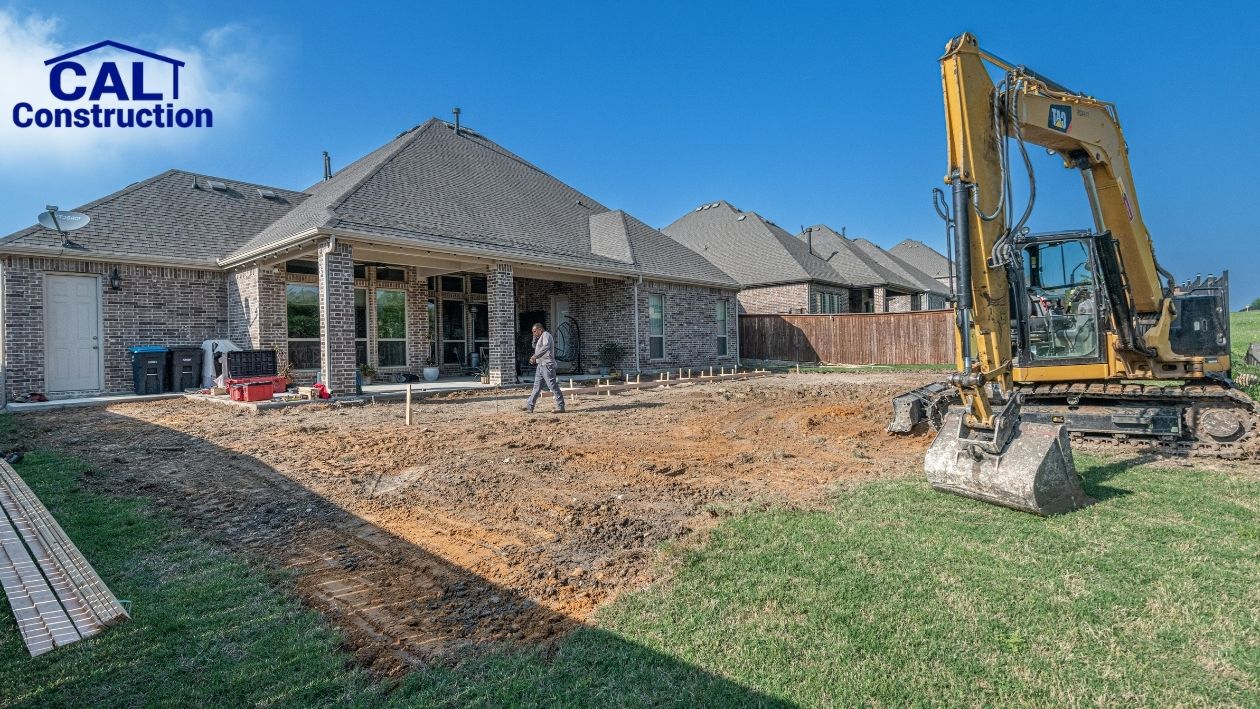
That’s why grading and drainage need to be part of the site evaluation before choosing the final location of a custom home or barndominium.
Look at:
- Natural drainage paths
- Low areas
- Creeks
- Ponds
- Ditches
- Slopes
- Floodplain areas
- Existing culverts
- Where water flows after heavy rain
Placing your home at the highest possible point isn’t automatically the answer either. The building site still needs appropriate access, reasonable grading and practical utility connections.
The goal is finding the location that makes sense for the entire property.
How Far From the Road Should You Build?
One of the biggest reasons people buy acreage around Kansas City is privacy.
It’s tempting to push the house as far away from the road as possible.
Sometimes that’s the perfect decision.
But remember: every additional foot between the road and your home can potentially affect the cost of:
- Driveway construction
- Electric service
- Water lines
- Internet
- Gas or propane service
- Snow removal
- Maintenance
You don’t necessarily need to build close to the road.
Just understand the tradeoff before choosing your home site.
Can You Build a Barndominium Anywhere on Your Property?
Not automatically.
Acreage still has rules.
Before planning a custom home or barndominium, investigate:
- Zoning
- Setbacks
- Easements
- Floodplain restrictions
- Septic requirements
- Well requirements
- Utility easements
- Road access
- Deed restrictions
Miami County, for example, notes that development potential depends on factors including zoning, property size and available infrastructure. It also encourages buyers to investigate utility and drainage easements and deed restrictions before developing property.
The same principle applies throughout Johnson County, Franklin County and surrounding Kansas communities.
Requirements can even differ between nearby properties.
How Much Does It Cost to Bring Utilities to Acreage in Kansas?
Unfortunately, there isn’t a useful one-size-fits-all number.
Utility and site costs depend heavily on the property.
A parcel with:
- Rural water at the road
- Electricity nearby
- Good soils
- An existing entrance
- Minimal grading
could be considerably simpler to develop than another parcel of the same size requiring:
- A private well
- Extensive septic work
- Long utility runs
- A new culvert
- Hundreds of feet of driveway
- Tree clearing
- Significant grading
This is why comparing land based solely on the purchase price can be misleading.
The Cheaper Lot Isn’t Always the Cheaper Place to Build
Imagine two ten-acre properties.
Property A: $175,000
Utilities nearby, good access and straightforward site conditions.
Property B: $145,000
Long driveway, significant grading, no rural water and expensive utility extensions.
Property B looks $30,000 cheaper when you’re browsing listings.
It may not be cheaper by the time construction begins.
That’s why evaluating land + site development + utilities + home construction together provides a much more realistic picture of your total investment.
What Should You Check Before Buying Land to Build a House?
Before purchasing acreage for a custom home or barndominium, try to answer these questions:
- Is the property legally buildable?
- What is the zoning?
- Are there deed restrictions?
- Where can the home be placed?
- Is the property in a floodplain?
- What are the setbacks?
- Can the property support a septic system?
- Is rural water available?
- If not, can a well be installed?
- Where is the nearest electricity?
- What internet service is available?
- How will the driveway enter the property?
- Will a culvert or entrance permit be required?
- How much clearing and grading will be needed?
- Are there drainage issues?
- Are there utility easements?
- Where would a future shop or outbuilding go?
You don’t necessarily need final engineering answers before buying land.
But you should know whether there are major unknowns that could affect the project.
Should You Talk to a Builder Before Buying Acreage?
Yes—especially if your goal is a custom home or barndominium.
A real estate agent can help you find properties.
Surveyors, county officials, utility providers and engineers all have important roles too.
But involving your builder early gives you another perspective:
What will it actually take to build the home you want on this particular property?
CAL Construction helps homeowners consider the building site, utility locations, grading, access, drainage and other site-related factors as part of its custom home building process.
You don’t have to wait until you own the land and have final plans to start that conversation.
Building on Acreage Around Kansas City
For many families, acreage offers the best of both worlds.
You can have space and privacy while remaining within driving distance of Kansas City, Overland Park, Olathe and other major employment and shopping areas.
CAL Construction builds custom homes and barndominiums throughout Miami County, Johnson County and Franklin County, including:
- Paola
- Louisburg
- Spring Hill
- Stilwell
- Bucyrus
- Olathe
- Ottawa
- Osawatomie
- Surrounding Kansas City-area communities
Whether you’re considering a traditional custom home, ranch-style home, modern farmhouse or Kansas barndominium, the best project begins with understanding the property before construction starts.
Frequently Asked Questions About Building on Acreage in Kansas
Do I need a septic system when building on acreage in Kansas?
If public sewer service isn’t available, you will generally need an approved on-site wastewater system. Requirements vary by county and property, and soil conditions can affect what type of system is appropriate.
Can I build a barndominium on land with a septic system?
Yes, in many cases. A residential barndominium can use an on-site wastewater system just like a traditional custom home, subject to applicable local requirements. The septic system should be planned alongside the house, shop, driveway, well and other site improvements.
Do I need a well to build a house in rural Kansas?
Not necessarily. Some rural properties have access to rural water districts, while others require private wells. Verify water availability before purchasing acreage rather than assuming a nearby water line can serve your property.
How do I know whether rural water is available?
Contact the water district or utility serving the property and provide the exact parcel or address. Ask whether service is available, where the nearest line is located and what connection or meter costs may apply.
Can I build anywhere I want on ten acres?
No. Property size alone doesn’t determine where a house can be built. Zoning, setbacks, septic areas, wells, easements, floodplains, drainage and road access can all affect the usable building area.
Should I test the soil before buying land?
If the property will require an onsite wastewater system, understanding soil conditions can be extremely valuable. The exact evaluation process varies by jurisdiction. For example, Johnson County requires a soil profile analysis as part of its private sewage treatment system process.
What utilities should I check before buying acreage?
At minimum, investigate water, wastewater, electricity, natural gas or propane options and internet availability. You should also consider the costs of the driveway, culvert, grading and drainage because these can represent significant site-development expenses.
Is it cheaper to build a barndominium on acreage?
Not automatically. A barndominium can provide a very efficient way to combine living space with garages, shops or storage, but the overall project cost still depends on finishes, size, structural design, site work, utilities and infrastructure.
A fully finished residential barndominium should be budgeted as a custom home project—not simply as an inexpensive metal building.
Does CAL Construction build barndominiums near Kansas City?
Yes. CAL Construction builds custom homes and barndominiums throughout Miami, Johnson and Franklin Counties, including Paola, Louisburg, Spring Hill, Stilwell, Bucyrus, Olathe, Ottawa and nearby Kansas City-area communities.
Building Your Home Starts With Understanding Your Land
The floor plan gets most of the attention when people dream about building a home.
But on acreage, what’s outside the house can be just as important as what’s inside it.
Septic.
Water.
Electricity.
Driveway access.
Drainage.
Grading.
Those pieces can determine where your home goes and how much the entire project ultimately costs.
CAL Construction helps homeowners throughout the Kansas City area plan custom homes and barndominiums around both the home they want and the property they’re building on.
If you already own acreage—or you’re still searching for the right property—talk with CAL Construction before you get too far into the process.
Explore our custom homes and barndominiums, or contact CAL Construction to discuss your land, ideas and next steps.
Bucyrus, Paola, Louisburg, Spring Hill, Olathe, Ottawa, Kansas City, Miami County, Johnson County and Franklin County
Custom Home Contractor in Paola, Louisburg & the Kansas City Area
If you’re planning a custom home, barndominium, or other residential build in eastern Kansas, CAL Construction can help turn your ideas into a home designed around the way you live. Based in Paola, CAL Construction serves homeowners throughout Miami, Franklin, and Johnson counties, including Paola, Louisburg, Spring Hill, Stilwell, Olathe, Bucyrus, Overland Park, and nearby communities.
From the early planning stages through construction, our team focuses on quality craftsmanship, practical design, clear communication, and attention to the details that make a home feel personal. Whether you already own land, are exploring floor plans, or are still deciding between a traditional custom home and a barndominium, we can help you understand your options and plan the next steps.
Ready to start building? Contact CAL Construction to talk about your property, budget, timeline, and ideas, and learn more about building a custom home in the Kansas City area.